|
|
A huge market...
As of today, our world’s population stands at about 8.25
billion people — and astonishingly there are over 7.4
billion mobile phones and smartphones in active use
worldwide, nearly as many devices as people on the
planet!
To put that in perspective: back in 2000, there were
only about 750 million active mobile subscribers —
meaning the number of mobile users has soared by more
than 900 % in just over two decades. That’s one of the
fastest adoption curves of any major technology in
history.
Smartphones specifically have become the dominant form
of mobile device. In 2014, annual shipments of new
tablets and smartphones crossed 1.25 billion units,
overtaking global PC sales for the first time — a
milestone that fundamentally reshaped how people connect
to the digital world.
Smartphone share of total mobile devices has exploded:
from under 1 % of mobile handsets shipped in 2002, to
around 5 % by 2007, to over **20 % by 2013, and today
smartphones account for the vast majority of airtime and
data usage globally.
How the Mobile OS Landscape Transformed
In the early smartphone era, Symbian (primarily on Nokia
devices) dominated the high-end segment — controlling
around 60 % market share in the early 2000s. But at its
peak in the late 2000s, its grip quickly fell, and today
Symbian’s presence is virtually nonexistent. Other early
players like Palm OS have also disappeared from the
mainstream.
By contrast, Android, a Linux-kernel–based OS originally
developed around 2003 and later acquired by Google, has
grown to become the clear global leader. In 2025,
Android commanded around 72–73 % of the worldwide
smartphone OS market, with roughly 3.9 billion active
Android devices in use. Apple’s iOS follows with about
27 % of the market — a striking duopoly compared to the
fragmented early-era ecosystem.
Whereas Microsoft once tried to gain traction with
Pocket PC smartphone editions and later mobile OS
versions (even briefly buoyed by a Nokia partnership),
Windows Mobile and Windows Phone are now essentially
gone, holding well under 1 % share** of the mobile OS
market in today’s landscape.
And while transfer between PC and Handheld still matters, it's the Internet which has taken over as gateway for data-exchange. Today "click-and-transfer" has become the standard for all OS - but for malware unfortunately as well!
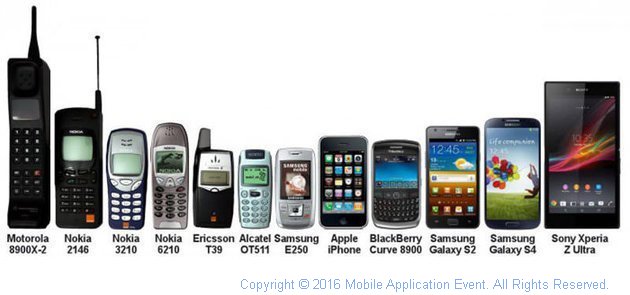
... with TABLET & SMARTPHONE and more...
In short - we are talking
about a market with over 7 billion internet users
and more than half a trillion USD in direct and indirect revenues!
|